
If you’ve ever wanted to step into a Victorian fairy tale armed with a musket, a pickaxe, and a healthy dose of curiosity, Nightingale might be the most enchanting nightmare you’ll play this year. Developed by Inflexion Games, it blends survival, crafting, and exploration into a sprawling gaslamp fantasy world that constantly teeters between beauty and brutality.
I’ve spent over 50 hours in Nightingale, and it’s been equal parts awe-inspiring and infuriating. Imagine the whimsy of Alice in Wonderland colliding with the grind of Valheim and the survival tension of Rust. Sometimes it sings; sometimes it stumbles. But it always makes you feel something—and in this genre, that’s rare.
A World That Feels Alive (and Indifferent to Your Existence)
The first time I stepped into Nightingale’s realm, I stopped moving for a good five minutes. The light filtered through twisted branches; fey ruins glowed faintly in the distance; something that sounded like laughter—or maybe screaming—echoed from a nearby cave. It’s breathtaking. And then, of course, a fae creature smacked me to death two minutes later.
That’s the rhythm of Nightingale: wonder followed by pain. It never lets you forget that survival comes first. You’ll scavenge for twigs, craft makeshift tools, and build your first rickety shelter before realizing that the very land itself seems alive. Weather shifts abruptly. The sun doesn’t just set—it collapses into darkness. Every change in light, every gust of wind feels designed to make you glance nervously over your shoulder.
Gameplay: Between Crafting and Chaos
At its core, Nightingale is a survival crafting RPG—but it plays with the formula in clever ways. Instead of one massive open world, you navigate a network of “Realms”—procedurally generated worlds connected by portals. Each realm has unique biomes, resources, and enemies. You can create new ones using Realm Cards, which modify difficulty, weather, and loot in unpredictable ways. It’s like dealing tarot cards for your own fate Nightingale.
I love this system. It turns exploration into ritual. Before entering a portal, you lay down cards, adjust modifiers, and whisper a small prayer that this realm won’t instantly murder you. It’s unpredictable, and that unpredictability gives the game an energy most survival titles lack.
Resource gathering is deep but not tedious—once you understand the rhythm. Early hours are rough; inventory fills up fast, and crafting menus can feel intimidating. But soon, you fall into a loop: gather, build, explore, die, repeat. When the world opens up, Nightingale becomes less about surviving and more about shaping—crafting estates, experimenting with architecture, and even automating tasks with servants and magic Nightingale
Combat: Clumsy Beauty in Motion
Combat in Nightingale feels… complicated. You get both melee and ranged options, including muskets, crossbows, and magic. The gunplay feels solid—musket smoke hangs in the air, shots echo like thunder—but melee combat can be awkward. Hit detection isn’t always reliable, and dodging feels weighty. Still, there’s a gritty charm to it. Every fight feels messy, desperate, human.
What redeems the combat system is how it looks. Animations are fluid, and spell effects shimmer like oil on water. The game doesn’t try to make you a superhero—it wants you to feel fragile. Even late in the game, when you’re wielding enchanted weapons, a single ambush can end you. That vulnerability makes victory taste sweeter.
Building and Crafting: Victorian Minecraft with Teeth
Let’s talk building. I’ve lost entire evenings constructing gothic manors and rickety workshops, complete with flickering lanterns and overgrown courtyards. The building system is surprisingly robust, letting you snap together detailed structures that actually feel period-appropriate. Think The Sims meets Frankenstein’s laboratory.
Crafting goes beyond necessity. You’ll create alchemical devices, enchanted furniture, and arcane machines. Each one feels like a piece of the world’s lore—a reminder that this is not just survival, but civilization through chaos. There’s something poetic about erecting a delicate greenhouse in a world determined to destroy you.
Story and Atmosphere: Mystery by Design
Unlike most survival games, Nightingale has a real narrative undercurrent. You play as a Realmwalker, a human stranded after a cataclysm severs humanity’s connection to the Fae realms. Your goal: survive, rebuild, and find the mythical city of Nightingale, humanity’s last sanctuary.
The story unfolds through exploration, notes, and eerie NPC encounters. It’s minimalist but effective. You’re never spoon-fed exposition. Instead, you piece it together, the same way you’d interpret a dream. Sometimes the lore feels too cryptic, but I appreciate the restraint. The world feels ancient, unknowable—like it was here long before you arrived.
Visuals and Performance: A Gothic Feast for the Eyes
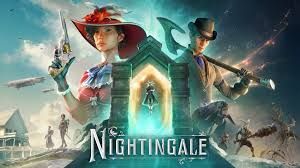
Visually, Nightingale is stunning. The art direction combines Victorian aesthetics with fae fantasy—iron lanterns glowing among mossy ruins, clockwork devices powered by magic, and towering portals wreathed in ivy. The textures can be inconsistent, but the atmosphere is what sells it. Every screenshot looks like a painting.
Performance, though, is mixed. On a mid-range PC, frame drops are noticeable in dense biomes. Loading new realms can take time, and occasional bugs break immersion. That said, Inflexion has been patching aggressively, and optimization improves steadily. For a game this ambitious, some rough edges are forgivable.
Sound Design: Where the Magic Hides
The sound design might be Nightingale’s secret weapon. The world breathes through its audio. Creaking branches, whispering wind, distant fae voices—they all build a sense of place that visuals alone couldn’t. The soundtrack is sparse but haunting, blending folk melodies with ethereal drones. Sometimes silence itself is the scariest sound of all.
I still remember standing in a swamp realm, surrounded by fog so thick I could barely see, when I heard a lullaby echo from nowhere. No enemies in sight. Just that voice. I alt-tabbed out for a bit after that.
Multiplayer and Cooperation: Survival with Friends (or Strangers)
Nightingale shines in co-op. Up to six players can share realms, build settlements, and tackle challenges together. Coordination becomes crucial—one person gathers, another crafts, while someone else scouts for rare materials. The social dynamic turns every expedition into an adventure.
Public realms exist, but they’re chaotic. I had one session where a stranger silently helped me fend off a raid, then disappeared into a portal without a word. It was eerie, but oddly poetic. In Nightingale, even fleeting alliances feel meaningful.
How to Survive and Thrive in Nightingale
Let’s get practical. If you’re planning to dive in, here’s what helped me survive my first brutal week.
1. Master the Realm Cards Early
Realm Cards define everything—resources, enemies, even weather. Learn how combinations work. Using a “Gentle Weather” card with a “Resource Rich” one can make early farming easier. Mess it up, and you might spawn in a nightmare storm filled with angry giants.
2. Build Shelter Before Sundown
Night falls fast. Always build a campfire and basic shelter within your first hour. The cold and nocturnal fae won’t forgive carelessness.
3. Prioritize Crafting Tools
Tools degrade quickly. Keep spares of everything—especially your pickaxe and axe. Repair stations become lifesavers.
4. Cook Real Meals
Don’t ignore cooking. Raw food barely sustains you, but cooked meals grant buffs that make combat and stamina management easier.
5. Explore, Don’t Rush
Nightingale rewards curiosity. Hidden groves often contain rare resources or lore fragments. Wander off the path—you’ll die sometimes, but you’ll also discover beauty others miss.
Common Questions About Nightingale
Is Nightingale single-player friendly?
Yes, though it’s clearly designed with co-op in mind. You can absolutely play solo; the difficulty scales reasonably. Just expect slower progress and lonelier nights.
Does the game have a main story ending?
There’s an overarching goal—to find the city of Nightingale—but much of the story is emergent. You define your own narrative through exploration and survival.
How does Nightingale compare to Valheim or Ark?
It sits somewhere between Valheim’s mythic survival and Ark’s complexity. It’s less combat-heavy than Ark, more narrative-driven than Valheim, and more atmospheric than both.
Can I build anywhere?
Mostly, yes. Some biomes restrict placement due to magical interference, but freedom is huge. You can even build entire estates in floating realms if you unlock the right cards.
What’s the replay value?
High. Thanks to the Realm Card system, every new playthrough feels different. You can tailor worlds for exploration, combat, or pure building.
Strengths and Weaknesses at a Glance
What Works
-
Stunning atmosphere and world design
-
Realm Card system adds depth and unpredictability
-
Beautiful crafting and building mechanics
-
Deep co-op integration
-
Haunting sound design
What Doesn’t
-
Occasional performance hiccups
-
Clunky melee combat
-
Sparse tutorials can frustrate new players
-
Some repetitive grind mid-game
Personal Take: When Magic Meets Mortality
Here’s the thing about Nightingale: it’s not for everyone. If you crave instant gratification, you’ll bounce off hard. But if you love discovery—if you enjoy games that make you feel small before they let you build something meaningful—you’ll fall for it completely.
It’s a game that doesn’t just want you to survive; it wants you to revere the act of survival. Every campfire is a victory, every sunrise a reprieve. I’ve played countless survival titles, but few capture that primal sense of awe like this one does.
Final Verdict
Nightingale is messy, magical, and utterly unique. It blends survival gameplay with a world that feels alive and alien, constantly daring you to step further into the unknown. Yes, there are bugs. Yes, the combat could use polish. But beneath all that lies a beating heart—a world that feels handcrafted with love, mystery, and danger.
If you’ve ever dreamed of surviving inside a storybook, Nightingale is worth every sleepless night.
Score: 8.5 / 10 – A haunting, imaginative survival experience that rewards patience and curiosity.